
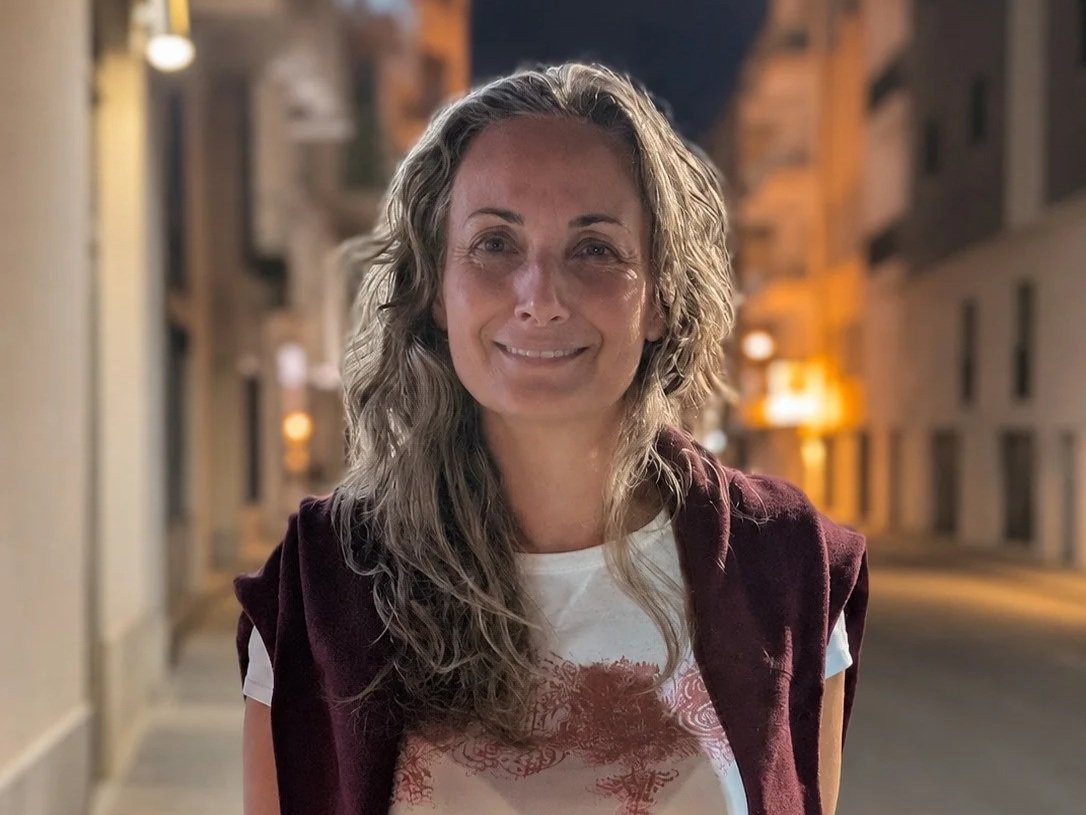
Shirley Mallia Cauchi
Following the sudden death of her husband - academic, cartoonist and author Ġorġ Mallia - Shirley Mallia Cauchi reflects on the process of letting go, making peace with death and finding the strength to continue living. Drawing on her Buddhist beliefs, she explains how embracing the present, acknowledging pain without allowing it to become suffering, and remaining grateful for what life offers have helped her navigate her loss.
Letting go is not about forgetting or diminishing the importance of someone you have lost, at least not to me. Rather, it is about accepting what has happened and finding a way to continue living.
I feel that I have always accepted death. When my paternal grandparents died, I was too young to fully understand what had happened, and I had never experienced death in my immediate family until I was 13, when my uncle died at a young age following an accident. Hence, seeing my father grieve, was my first real experience of losing someone close.
When my maternal grandmother passed away, I was older. Although it was painful, as I was there in the room when she died, somehow, I felt that I was looking at an empty shell and not at my grandmother an more. I looked at her and comforted my mother, but the feeling was that she was no longer in her body, and I saw it as a liberating process.
A beautiful goodbye
As time went by, I became more and more curious in understanding more about the process of passing away. At one point I was tempted to do a course to help people pass on to the other side.
In Malta, the norm is that a priest gives the dying the last rites. Similarly, in Buddhism, Buddhist nuns visit people who are nearing the end of their lives and help them make peace with themselves, tie up loose ends and address any residual issues they might have.
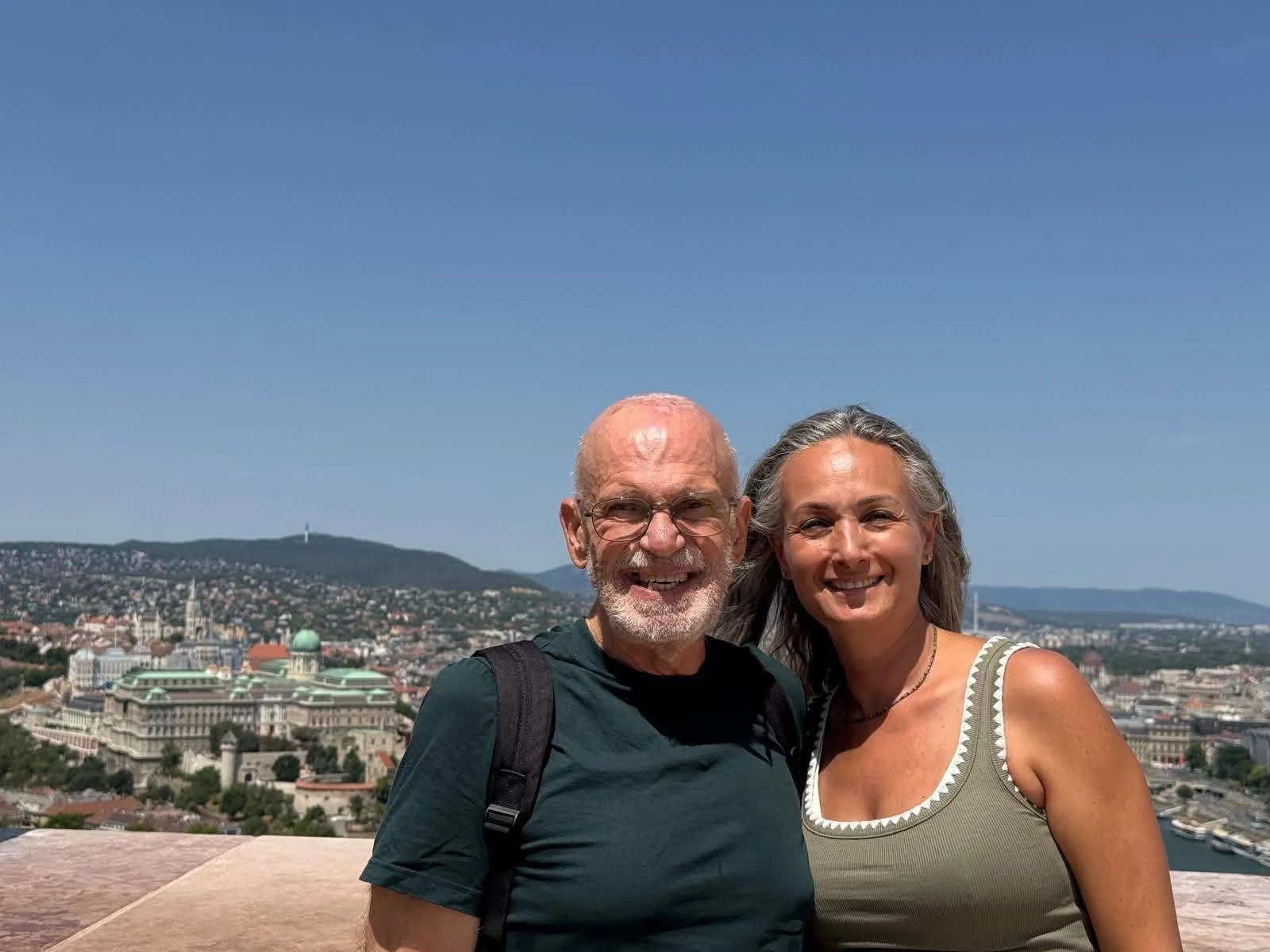
“When you acknowledge death as part of life, you tend to say what you need to say... This is why I have no regrets when I think about the beautiful relationship Ġorġ and I shared, as we gave our all during the time we had together.”
Ġorġ did not really understand my fascination with this, and I smile when I remember telling him that it was beautiful to be able to come to terms with the fact that one day you are going to leave, and to make peace with it.
I believe that death may be frightening, and this is especially true if you have unfinished business. I also believe that if you are surrounded by your loved ones on your deathbed, it can become a beautiful goodbye.
Making peace with death
When someone dies, they leave a void and nothing can really prepare you for that. But if you never think or talk about death, you will be even less prepared when it happens.
I believe in the importance of reflecting and discussing our inevitable death to prepare ourselves. One can work towards preventing illness and live a healthy lifestyle, but one cannot prevent death. It will come, and fearing it will not help you.
When you acknowledge death as part of life, you tend to say what you need to say rather than leave it unuttered and that includes telling the people you love, that you love and appreciate them.
This is why I have no regrets when I think about the beautiful relationship Ġorġ and I shared, as we gave our all during the time we had together. We did not plan too far into the future, and we lived in the moment. Our relationship was short but intense, precisely because we lived in the present.
So, when I look back, I do not feel sorry for what I might have missed, but I am grateful for the special time we had together.
By making peace with the fact that one day my loved ones will die, I also understand the importance of having a support network to help me continue living.
Having space for myself
Although Ġorġ and I shared a very special bond and relationship, he always encouraged me to have my own space, to have my own life outside our life together.
He encouraged me, even when some of the things I did were alien to him, such as for example, when I attended Buddhist Sangha, where I met with friends, meditated together, and took part in discussions and readings.
This was also the case with my Japanese martial art (Aikido) practice, and going to the gym. He was always there, shopping, cleaning, and cooking so that I would find dinner and other things ready when back from my activities.
He knew and appreciated how important these activities were to me. He used to tell me: "If something happens to me, you must continue with your activities, because these will help you continue living your life." - And how right he was!
When Ġorġ died
Ġorġ’s passing was sudden and when he passed, even while there, I was not allowed by his side because he had been sedated. This was very difficult for me, as I wanted to be with him while he was still in his senses to reassure him.
My immediate reaction was one of calm and composure - in fact, it felt like being in a dream, or watching a movie - in that it did not feel real.
The black hole started within a few minutes - with denial. I was looking at him and thinking to myself that this is not him - this is just a shell - the same feeling I had experienced with my grandmother. Ġorġ had such a larger-than-life personality that I could not reconcile the husk I was looking at with the man I knew - he was no longer there.
Then it hits you… in our case, within 20 minutes, the news was already out in the public domain. I felt that this was very insensitive because we had not yet told one of Ġorġ’s sisters, and we were concerned that she might find out through the media.
I took my time, and stayed next to him for a very long time. I cried, stared, stroked his face, hugged him, and asked why, over and over again.
When we eventually went home, I could not eat and sleep well for the first few days. I was experiencing these outbursts, almost as though the loss was replaying and hitting me all over again.
I was going through these repeated waves of emotion, but through all this time I was trying to rationalise what had happened and telling myself that this was now a reality I had to accept.
So yes, I did experience the black hole, but I knew I needed to go through it so that I could eventually fully accept what had happened.
“Ġorġ was the most important person in my life, but I also had a life of my own which energised me, so that I could continue riding the wave of life. My wave is flowing, therefore, I need to surf and ride it and embrace the opportunities that come along.”
That period lasted until the funeral. Ġorġ passed away on a Wednesday, and the funeral was on the Saturday. On Sunday, I promised myself that on Monday morning I would go to the gym, then go to work, and in the evening, return to my Aikido practice.
I told myself that this was what Ġorġ would have wanted me to do. It was not just about continuing with the things that mattered to me.
It was also about remembering what he had wanted for me. There were several times when I felt I might slip back into that hole and wallow in self-pity, but I refused to go there or to remain in that mindset because I do not believe this mindset helps.
Acknowledging pain
One of the Buddhist principles I embrace is that pain, be it physical or emotional, is inevitable and part of life. Pain will always be there, but if I put a spotlight on it, focus on it and moan about it, then apart from experiencing pain, I am also adding suffering to it and making things worse.
Instead, I acknowledged my pain, while focusing on finding the positive aspects that come out from this pain.
I did find something positive in what had happened. Ġorġ always said that he wanted a quick death, and that was the way he passed - so I made peace with that. When I look back, I think that, although he certainly did not want to die, he had concluded a lot of little things in his life that made his passing easier for me to accept.
For example, a few weeks before he died, I had explained how Aikido could be translated into life. We do a lot of throws, we throw each other to the ground before getting up again. He used to ask me why I didn’t find it annoying to allow myself to be thrown around.
He did finally understand that like our downs in life, it humbles you. You also persevere - you keep trying, again and again, and you do not give up.
Life is always throwing you down, but when life throws you, you get back up. Ġorġ here could have quoted one of his favourite superheroes, Batman: “"Why do we fall …? So, we can learn to pick ourselves up again."
Reasons to keep living
And life teaches you that you have to get up and keep moving. That is why I believe that it is important not to centre your entire life around one person. We should have many relationships and interests that give our lives meaning: I have my son, my family, Aikido, my friends, my hobbies and interests, and I had Ġorġ.
Ġorġ was the most important person in my life, but I also had a life of my own which energised me, so that I could continue riding the wave of life. My wave is flowing, therefore, I need to surf and ride it and embrace the opportunities that come along.
I do not believe we should judge how other people grieve or how they choose to remember someone. Everyone has their own moments, their own ways, their own coping mechanisms, and those moments often happen when one is alone.
Drawing dragons
After Ġorġ passed away, I had a dragon tattooed. Ġorġ loved dragons - these mythical creatures fascinated him. He disliked tattoos, so it is ironic that I had one done in his memory - he used to tell me that I could get inked after he passed away so we wouldn’t have to see my tattoos.
Whenever I face something, I sometimes ask myself: what would Ġorġ want? One common denominator is that he would have wanted to see me happy.
Living in the present and being grateful and positive also come from Eastern philosophy, teachings that I fully embrace.
Practising gratitude daily helps me remain positive and keeps both my feet on the ground. It allows me to acknowledge the negative while also recognising the positive. For example, I sometimes experience hip pain, but instead of focusing on the pain, I am grateful that I can still walk, think, work, perform and do so many other things.
They say every cloud has a silver lining, and indeed, there might be a very dark cloud looming overhead, but behind it the sun still shines. I feel that acknowledging and recognising that silver lining too, helps me see the cloud from a different perspective.
Kindness lives on
I would also like to mention how the kind deeds a person carries out during their lifetime are carried forward through the kindness shown to their next of kin.
After Ġorġ’s passing, I was supported by a surge of people, starting with family and friends, but also including people I did not know personally, such as Ġorġ’s students and others whose lives he had touched through his selflessness and kindness.
I was very much in awe of the number of people who offered to meet up with me. People genuinely offered their time to sit with me and provide support.
This goes to show how important it is to be kind, honest, truthful, compassionate and caring towards others.
These are the qualities that brought Ġorġ and me together. These same qualities have now brought other people from Ġorġ’s past and me together. And that is how life goes on…
What do you think?
Is there a woman-related subject you feel needs to be ‘unclouded’, spoken about, or explained? Is there something you feel passionately about? If so, share your views… or share your story - to inspire and help other women.
Woman Unclouded believes that by sharing - stories, experiences and expertise - women can inspire one another - to take the leap, or to simply make sense of things.
All you have to do is drop us an email at hello@womanunclouded.com