
Out of the box. Two disabled feminists on bodies, desire, power - and the truths nobody asks us about
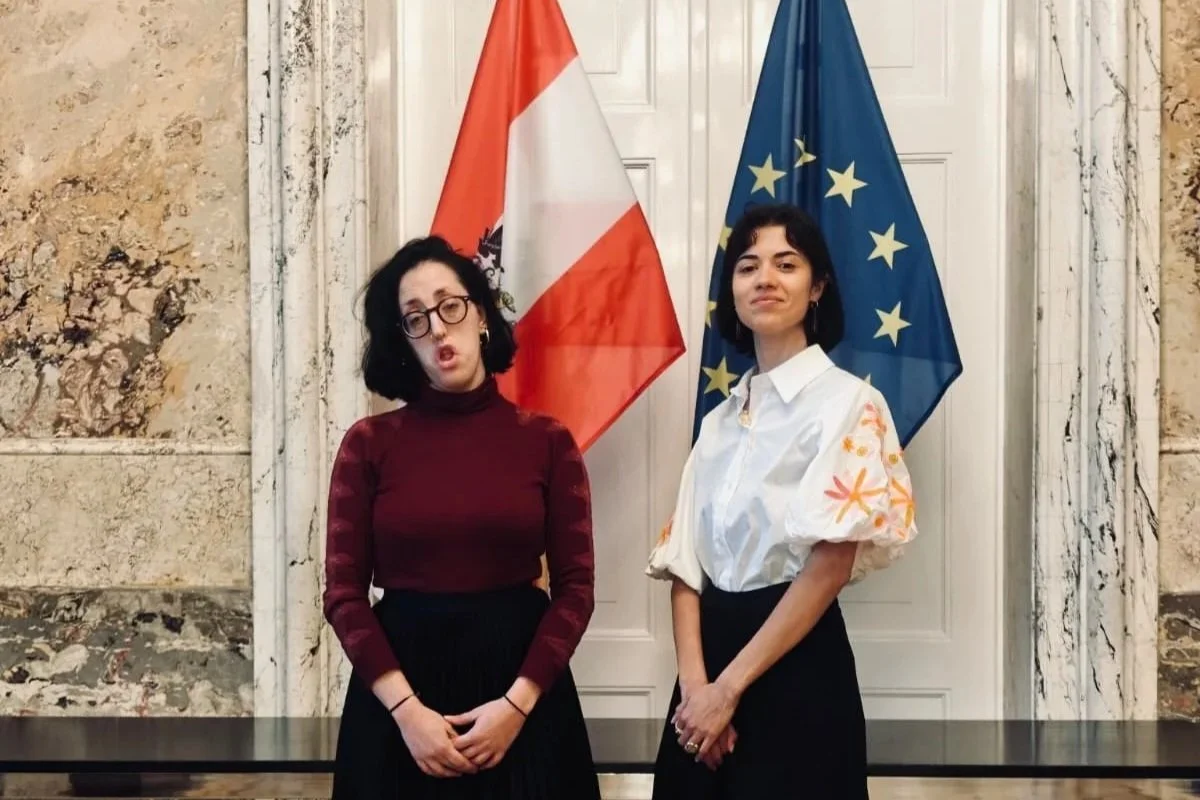
Lara Calleja and Giulia Dalmonte
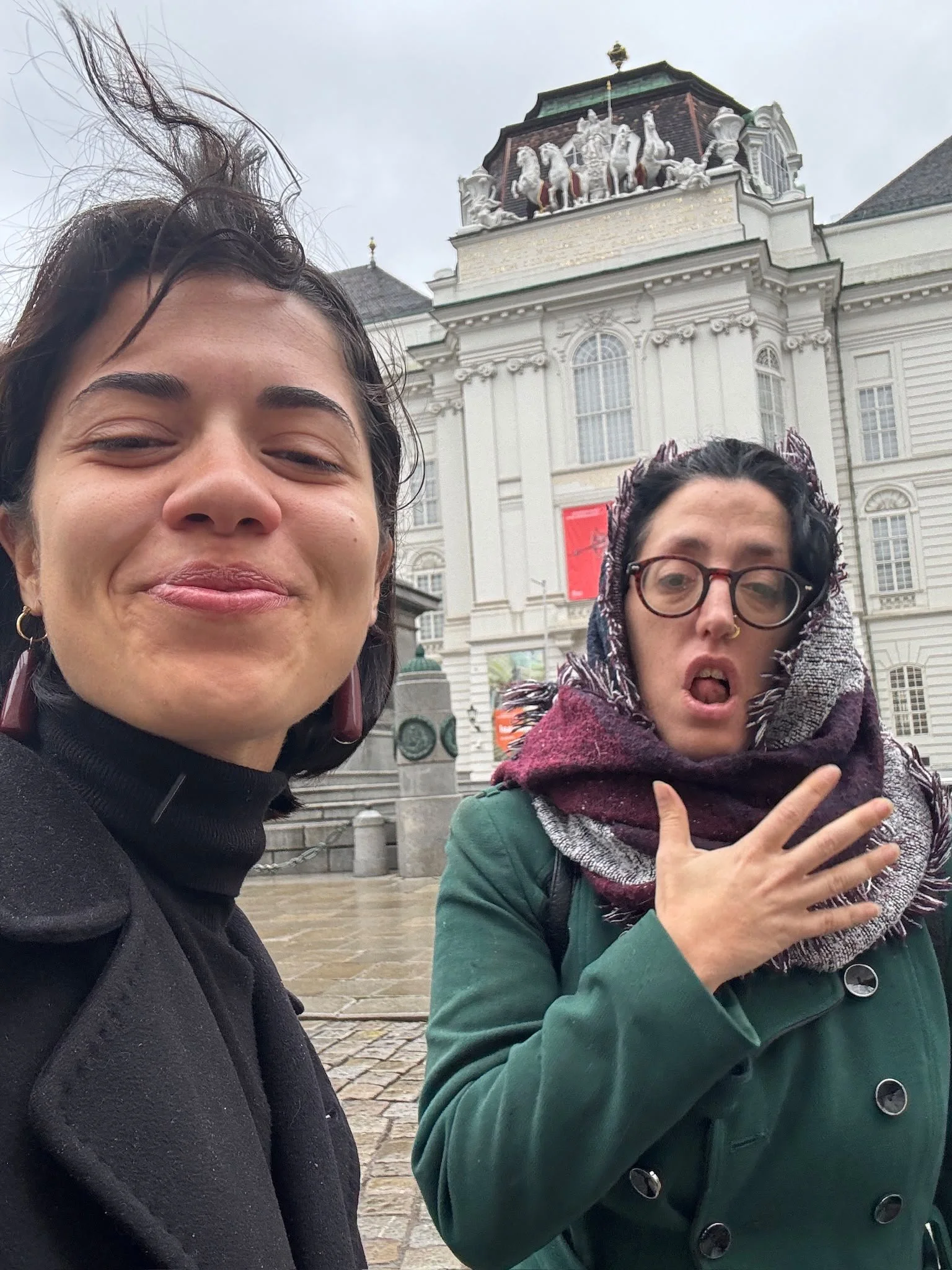
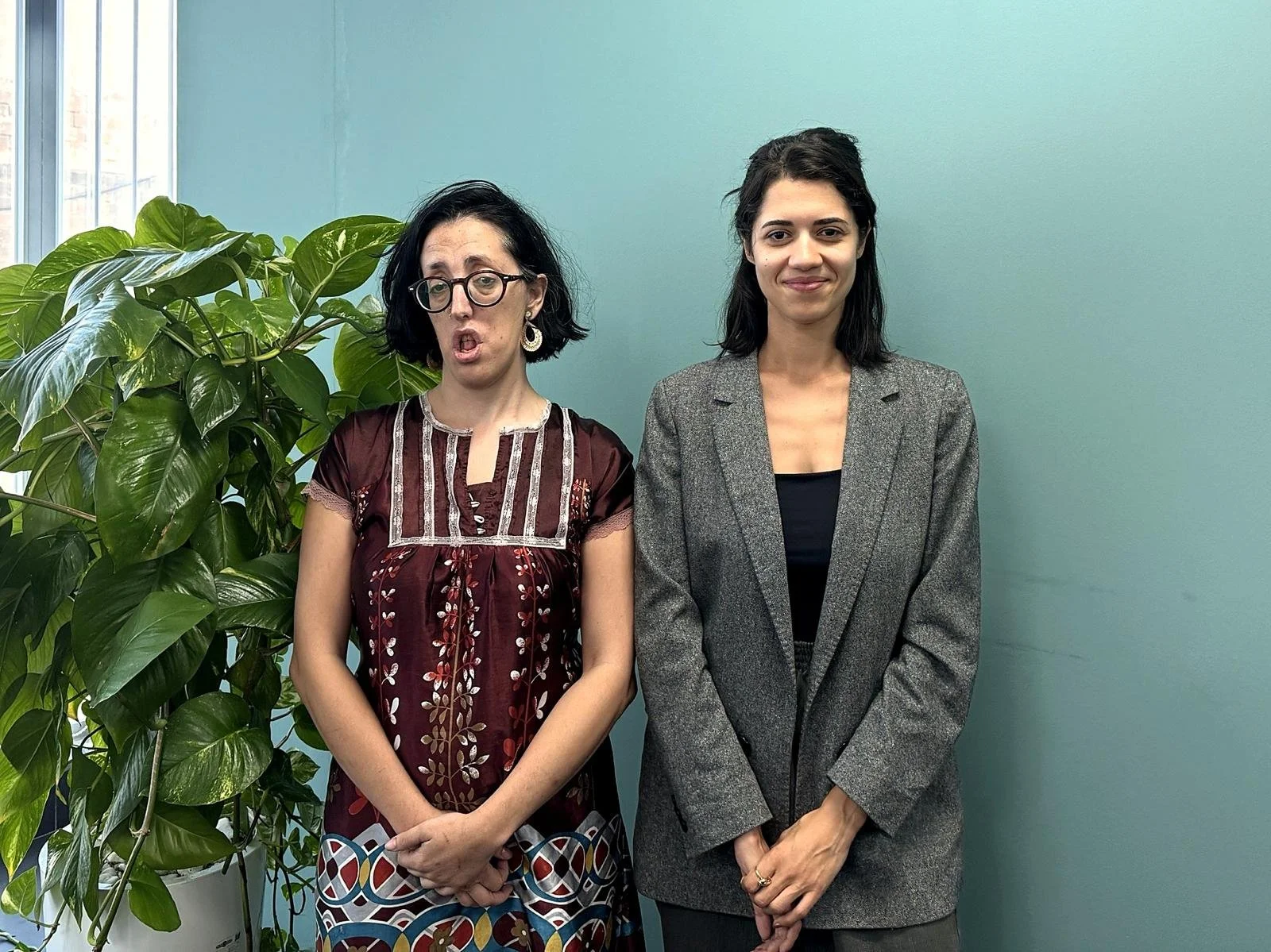
We are Lara Calleja and Giulia Dalmonte. One of us was born with a rare neuromuscular condition. The other became disabled at 23, after a stroke. Between us: a European literature prize, decades of activism, and a shared frustration with how little the world expects women like us to want, say or decide.
When people meet a woman with a disability, they tend to ask one question, usually without saying it out loud: what happened to you? Rarely do they ask what we think about housing, migration or climate policy, whom we desire, whether we want children, or what we would change if we sat in Parliament. Disability becomes the whole story, and everything else - our politics, our sexuality, our work, our anger - is treated as a footnote.
We are writing this together because our stories are different, and because those differences are the point. Lara was born with congenital myasthenic syndrome, a rare condition of the junction between nerves and muscles that causes fatigable weakness.[1]
Giulia acquired a physical disability at 23, after a stroke. One of us grew up negotiating a body that was always ‘like this’; the other had to relearn her body as an adult, in a world that had already taught her what a ‘normal’ female body should be able to do. We are both activists and feminists. We are both, yes, sexual beings. And we both believe that what happens to women with disabilities is a test of whether feminism and disability rights mean what they say.
“We both believe that what happens to women with disabilities is a test of whether feminism and disability rights mean what they say.”
The disability justice movement, shaped by Patty Berne and the performance collective Sins Invalid, has long insisted that ableism cannot be separated from sexism, racism, homophobia and class. Patricia Hill Collins called this web of oppressions a matrix of domination, in which each system holds the others in place.[2]
International law has caught up, at least on paper. Article 6 of the UN Convention on the Rights of Persons with Disabilities recognises that women and girls with disabilities face multiple discrimination, and the UN Committee that monitors the Convention has found that we are more likely to be discriminated against than both disabled men and non-disabled women, naming violence, sexual and reproductive rights, and discrimination as the three areas of greatest concern.[3] What follows are the things those documents describe - told from the inside.
The superhero and the split self
Lara: For most of my life, I tried not to be disabled. Not because I thought the word was wrong, but because I knew what it did. It arrived in every room before me and decided who I was before I even said something. So I worked very hard to outrun it.
I am a writer. My first novel, Lucy Min?, was shortlisted for Malta’s National Book Prize; my short-story collection Kissirtu Kullimkien won the National Book Prize and, in 2021, the European Union Prize for Literature - the first time a Maltese woman received it.[4]
I have written for the stage, I have been politically active since I was 16, including with Moviment Graffitti, and I founded my own speech-writing business. I have refurbished an old house.[5] I list these things not to boast, but because I have noticed how much they confuse people.
“I was told, in a hundred small ways, to take up less space: not to make a fuss, not to make my body anyone else’s problem. I have chosen to be loud instead.”
The perplexity is almost visible: how can she be all that, and also disabled? The word puts you in a box, and the box is small. Audre Lorde, who wrote about her own body and illness in The Cancer Journals, knew this pressure well: women who do not fit are asked to be quieter, smaller, less visible, and grateful. Her answer was that the visibility which makes us most vulnerable is also the source of our greatest strength, and that our silence will not protect us.[6]
I was told, in a hundred small ways, to take up less space: not to make a fuss, not to make my body anyone else’s problem. I have chosen to be loud instead.
The trap I fell into is one many disabled people will recognise: the superhero complex. If society expects you to be fragile, you prove it wrong by being exceptional - tireless, accomplished, always ‘fine’. The Australian activist Stella Young named the other side of this coin ‘inspiration porn’: the habit of turning disabled people into objects of uplift for non-disabled audiences.[7]
“I never set out to be anyone’s inspiration. But I did set out to be impossible to pity, and that is its own kind of prison.”
The writer Eli Clare dissected the figure of the ‘supercrip’, celebrated for overcoming, and showed how that story flatters everyone except disabled people, because it locates the problem in our bodies rather than in the barriers around us.[8] I never set out to be anyone’s inspiration. But I did set out to be impossible to pity, and that is its own kind of prison.
The cost was exhaustion. My condition is, quite literally, one of fatigue - muscles that tire with use. On top of that physical tiredness sat another, heavier one: the labour of constantly managing how I was seen. Disabled people often talk about energy as a finite currency, the ‘spoons’ of Christine Miserandino’s metaphor.[9]
I spent an enormous number of mine on performance: on not asking for help, on hiding weakness, on being twice as good in order to be considered half as capable. The barriers I met were rarely about my body as such. They were ableist assumptions - about what I could do, what I should want, where I belonged - and I spent years challenging them, one by one.
“The problem was never our bodies. It was the shame we were taught to feel about them, the roles we were denied, and the stories other people told about us.”
As a teenager I was a rebel, and part of that rebellion was sexual. I was restless and defiant, and I had many partners. Looking back, some of it was joy and curiosity; some of it was proof - to others and to myself - that I was desirable, that I was not the sexless, breakable girl the word ‘disabled’ conjures up.
My identity was split between who I was and who I wanted to project. That split later found its way into my fiction: one reviewer noted that Lucy Min? set out to write the unpolite thoughts and anonymous one-night stands that rarely make it onto the page.[10]
Today I describe myself as a person with an impairment, and I use the word disability deliberately, especially in advocacy. The distinction matters. It echoes the social model of disability, which separates the impairment a person lives with from the disability imposed by an inaccessible, prejudiced society.[11]
As I once put it, a condition is part of a person, but it does not define that person.[12] I have stopped trying to escape the word. I would rather change what it means.
Relearning my body, and the silence around periods
Giulia: I was 23 when I had a stroke. I had been menstruating for almost ten years - long enough for it to be an ordinary, private part of life. Then, all of a sudden, I needed someone to change my pads for me, until I could relearn how to do it myself.
It was humiliating. It was also something I consciously erased from my own story, because I was ashamed. I did not think about it again for years, until I took part in a webinar on women with disabilities and menstruation and realised, sitting in front of my screen, that I had never told anyone. I was lucky: my mother was beside me, and her presence made it bearable. Many women do not have that, and many are cared for by people who were never taught how to do this with dignity.
“In the past decade, menstrual health has become a mainstream feminist cause - period poverty, taxes on products, workplace policies. Disabled menstruators are still largely missing from that conversation.”
Research confirms that this is not a private embarrassment but a structural silence. A systematic review of menstrual hygiene among disabled people found that menstruation and disability each carry their own stigma, and that evidence on how disabled people manage their periods with dignity remains thin.[13]
Other studies describe women’s loss of autonomy when caregivers change their pads, and carers left without guidance or suitable products.[14] In the past decade, menstrual health has become a mainstream feminist cause - period poverty, taxes on products, workplace policies. Disabled menstruators are still largely missing from that conversation. When you need help with the most intimate parts of your body, the questions of who touches you, how, and with what consent are not footnotes. They are human rights questions. It is still a taboo, and that is exactly why I am writing about it.
We are sexual beings too
Giulia: What changed in my body after the stroke also changed how I lived my body in relation to others - in intimacy, in desire, in how I allowed myself to be seen. For a while I did not recognise my own body, and it was hard to imagine anyone else wanting it.
Part of that was internal. Much of it was absorbed from outside. Women with disabilities are routinely imagined as either asexual or unfit for the roles society reserves for women: lover, partner, mother. Adrienne Asch and Michelle Fine called this ‘rolelessness’ as far back as 1988.[15]
“A society that cannot picture disabled women as sexual will also fail to give us sex education, accessible gynaecological care and contraception that respects our choices - and will fail to protect us from those who exploit the assumption that nobody would want us.”
Anne Finger, writing in 1992, argued that sexuality is often the site of disabled people’s deepest oppression and deepest pain, precisely because it is so rarely discussed - it is easier to talk about ramps than about who we sleep with.[16] The landmark study The Sexual Politics of Disability documented the same silence in its very subtitle: our desires had been left untold.[17]
We refuse that silence. We have desires, preferences, fantasies, boundaries, bad dates and good ones. Saying so is not oversharing; it is a political act. A society that cannot picture disabled women as sexual will also fail to give us sex education, accessible gynaecological care and contraception that respects our choices - and will fail to protect us from those who exploit the assumption that nobody would want us.
Love, and the myth of the saviour
Giulia: In past relationships I noticed a pattern. People treated me as ‘lucky’ to have a person who cared for me - and treated my partner as a saint: Poor thing, carrying everything. In that story I was the weight and my partner was the rescuer. It erased everything I brought to the relationship, and it turned care, which flows in both directions in any couple, into a one-way act of charity.
Lara and Giulia: We both recognise this. The saviour narrative is the romantic twin of the superhero complex: the disabled woman is either extraordinary or a burden, and her partner is either a hero or a fool. It has real consequences.
When care inside a couple is framed as sacrifice, it becomes harder to name unequal power, dependency or control as problems - and harder for a disabled woman to leave. Violence against women with disabilities is frequently committed by the very people they rely on for support, including partners, relatives and caregivers.[18]
What we want is unremarkable: to be seen as partners, with all the ordinary negotiation that involves. Interdependence is not a disability-specific weakness. It is the condition of every relationship worth having.
Violence, and the credibility gap
Lara and Giulia: The numbers are stark. In the EU-wide survey of the European Union Agency for Fundamental Rights, 34% of women with disabilities reported some form of physical or sexual violence since the age of 15, compared with 19% of women without disabilities; 61% had experienced sexual harassment, and the gap was widest among young women aged 18 to 29.[19]
The Council of Europe’s Commissioner for Human Rights cites estimates that women with disabilities are two to five times more likely to experience violence than other women, and more exposed to abuse online.[20]
“The saviour narrative is the romantic twin of the superhero complex: the disabled woman is either extraordinary or a burden, and her partner is either a hero or a fool.”
And when we speak, we are believed less. Women with disabilities meet barriers at every link of the justice chain: inaccessible police stations and shelters, missing sign-language interpretation or easy-to-read information, and above all prejudice - the assumption that we are confused, unreliable, or that nobody would target us.
The UN Committee has called on States to guarantee our equal access to justice and equal recognition before the law, and the UN Human Rights Council has acknowledged that women with disabilities who report violence may be ignored, disbelieved or misunderstood.[21] Every disbelieved woman is a message to every perpetrator.
Our bodies, our choices - including about children
Lara and Giulia: Reproductive politics is where the contradictions in how society sees disabled women are sharpest. We are assumed not to be sexual, discouraged from becoming mothers, and - historically, and still today in parts of the world - subjected to forced contraception, sterilisation and abortion.
The Convention is unambiguous: we have the right to decide freely and responsibly on the number and spacing of our children, to access reproductive and family-planning information, and to retain our fertility on an equal basis with others.[22]
Lara: In July 2022, Malta’s Parliament amended the Embryo Protection Act to allow pre-implantation genetic testing for a list of serious hereditary conditions, by 66 votes to three.[23] I spoke publicly at the time about what this meant for me: as someone with a hereditary condition, it opened the possibility of considering children in a way I had not felt able to before.[24]
“My life is worth living, fully. And I have the right to make informed decisions about my own body and my future family, with the best information medicine can offer.”
I know this is contested ground. Some in the disability movement worry that genetic selection sends a message about whose lives are worth living, and opponents in Malta framed the debate in those terms too.[25] I hold both things. My life is worth living, fully. And I have the right to make informed decisions about my own body and my future family, with the best information medicine can offer.
Lara and Giulia: What we reject is anyone else making the choice for us: the doctor who assumes, the relative who discourages, the State that decides. Malta is a sharp example of how little say women have over pregnancy in general. Until 2023 it was the only EU country with a total ban on abortion, and the amendment passed that year allows termination only when a woman’s life is at risk - a change that human rights organisations criticised as unworkable and dangerous.[26]
For disabled women, whose pregnancies are more often medicalised and whose health risks may be higher, such restrictions are anything but abstract.
Our politics do not end at reproduction, either. We hold views on housing, migration, labour rights, climate and overdevelopment - Lara’s fiction is, among other things, a sustained critique of Malta’s construction frenzy.[27] Being disabled does not make us single-issue citizens.
Representation, everywhere
Lara: If there is one message I want readers to take away, it is this: persons with disabilities must be visible everywhere - not only in disability services, but in parliaments, on artistic and cultural boards, in newsrooms, in boardrooms, in every position of power. Only when disabled people are seen doing everything will disability stop being the only thing people see.
We are still far from that. The European Disability Forum has documented the legal and practical barriers that keep persons with disabilities out of political life, as voters and as candidates, and the underrepresentation that results; in the 2019 European elections, around 400,000 people in 14 EU countries were denied the vote because of their disability.[28]
“Persons with disabilities must be visible everywhere - not only in disability services, but in parliaments, on artistic and cultural boards, in newsrooms, in boardrooms, in every position of power.”
The Convention guarantees our right to take part in political and public life, including to stand for election and hold office.[29] Representation is not a courtesy. When we are absent from the rooms where decisions are made, those decisions are made about us, without us.
Where our stories meet
Lara and Giulia: Our differences are instructive. Lara grew up with her impairment and spent her youth trying to outrun a label; Giulia had a life before disability and had to grieve, relearn and rebuild. One of us fought to be seen as more than disabled; the other had to learn to be disabled at all.
Yet we arrived at the same place: the problem was never our bodies. It was the shame we were taught to feel about them, the roles we were denied, and the stories other people told about us.
We are disabled women. We are feminists. We are writers, researchers, lovers, daughters, activists - and sometimes very tired. We bleed, we desire, we choose, we vote, we get angry.
A feminism that does not include us is incomplete, and a disability rights movement that ignores gender, sex and power misses the lives of half the people it claims to represent. The truths in this article should never have been unspoken. That is why we have spoken them.
About the authors
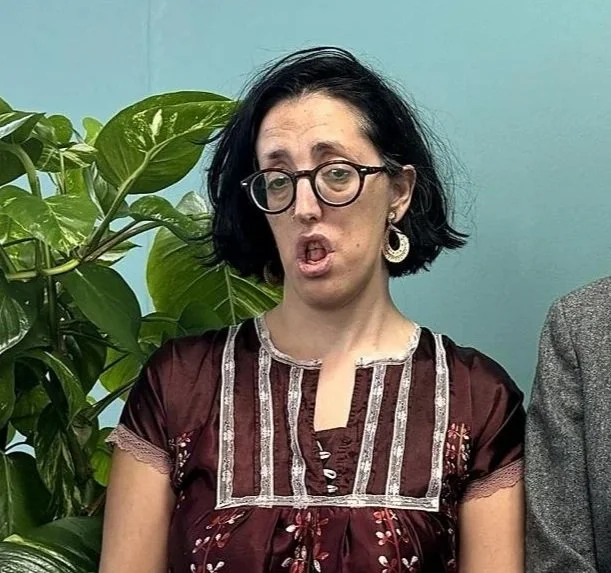
Lara Calleja is a Maltese novelist, playwright and activist. Her short-story collection Kissirtu Kullimkien (Merlin, 2020) won the 2021 European Union Prize for Literature and Malta’s National Book Prize.
Her debut novel Lucy Min? (Merlin, 2016) was shortlisted for the National Book Prize. She has been politically active since the age of sixteen.
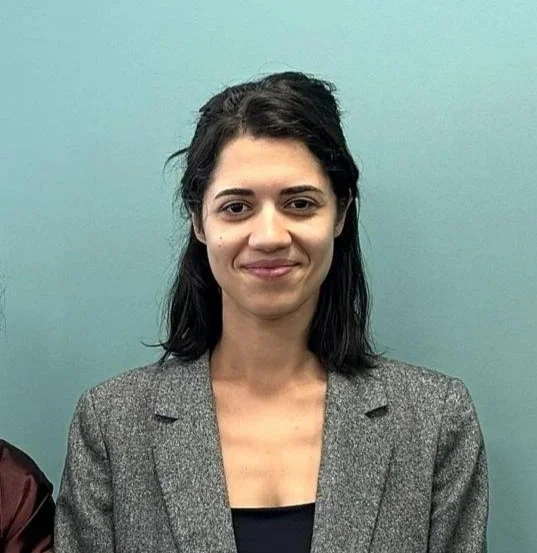
Giulia Dalmonte is an Italian-Dominican social researcher and cultural anthropologist working on disability, gender and migration in Malta and Europe.
She sits on the advisory board of the European Network on Independent Living (ENIL) and has been an activist since the age of thirteen.
Read more: The authors’ sources
[1]G. McMacken et al., ‘The beta-adrenergic agonist salbutamol modulates neuromuscular junction formation in zebrafish models of human myasthenic syndromes’, Human Molecular Genetics (2018), doi:10.1093/hmg/ddy062. Congenital myasthenic syndromes are a group of rare inherited disorders of the neuromuscular junction characterised by fatigable muscle weakness; see also R. Thompson et al., ‘Targeted therapies for congenital myasthenic syndromes’, Emerging Topics in Life Sciences 3 (2019), doi:10.1042/ETLS20180100.
[2]Sins Invalid, Skin, Tooth, and Bone: The Basis of Movement Is Our People - A Disability Justice Primer, 2nd ed. (Berkeley: Sins Invalid, 2019); P. Berne, ‘Disability Justice - a working draft’, Sins Invalid, 10 June 2015; P. H. Collins, Black Feminist Thought: Knowledge, Consciousness, and the Politics of Empowerment (Boston: Unwin Hyman, 1990).
[3]UN Convention on the Rights of Persons with Disabilities (CRPD), Article 6; Committee on the Rights of Persons with Disabilities, General comment No. 3 (2016) on women and girls with disabilities, CRPD/C/GC/3, 25 November 2016, paras. 2-3.
[4]European Commission Representation in Malta, ‘Lara Calleja is Malta’s 2021 EUPL winner’, https://ec.europa.eu/newsroom/representations/items/712319/en; MaltaToday, ‘Writer Lara Calleja wins European Prize for Literature 2021’ (May 2021); MaltaToday, ‘National Book Prize 2021: winners announced’; Times of Malta, ‘National Book Prize 2017 shortlist’, 30 August 2017.
[5]On political activism since age 16 and Moviment Graffitti: HELA, ‘Lara Calleja’, https://www.helamalta.com/writers/lara-calleja; T. Reljic, ‘Singing through the wreckage’, MaltaToday, 13 May 2020. On the play Taralalla: theatre programme, Spazju Kreattiv, Valletta, 30 October 2021 (OAR@UM). On Mil-Qalb: B. Abela, ‘“A condition is part of a person, but it does not define that person” - Mill-Qalb Founder’, MaltaCEOs.mt, 9 August 2021.
[6]A. Lorde, ‘The Transformation of Silence into Language and Action’ (1977), in Sister Outsider: Essays and Speeches (Trumansburg, NY: Crossing Press, 1984); A. Lorde, The Cancer Journals (San Francisco: Spinsters Ink, 1980).
[7]S. Young, ‘I’m not your inspiration, thank you very much’, TEDxSydney, April 2014.
[8]E. Clare, Exile and Pride: Disability, Queerness and Liberation (Cambridge, MA: South End Press, 1999).
[9]C. Miserandino, ‘The Spoon Theory’ (2003), butyoudontlooksick.com.
[10]M. Calleja, ‘Getting to know Lucy’, Times of Malta, 24 April 2016.
[11]Union of the Physically Impaired Against Segregation (UPIAS), Fundamental Principles of Disability (London, 1976); M. Oliver, The Politics of Disablement (Basingstoke: Macmillan, 1990).
[12]B. Abela, MaltaCEOs.mt, 9 August 2021 (see note 5).
[13]J. Wilbur et al., ‘Systematic review of menstrual hygiene management requirements, its barriers and strategies for disabled people’, PLOS ONE 14(2) (2019): e0210974.
[14]L. Bency and D. N. Shanbhag, ‘Perceptions regarding menstruation and practices during menstrual cycles among women with disability’, Indian Journal of Community Medicine (2024), doi:10.4103/ijcm.ijcm_abstract372; ‘What’s the bleeding problem: menstrual health and living with a disability’, The Lancet Regional Health - Western Pacific 19 (2022): 100349.
[15]A. Asch and M. Fine (eds.), Women with Disabilities: Essays in Psychology, Culture, and Politics (Philadelphia: Temple University Press, 1988).
[16]A. Finger, ‘Forbidden Fruit’, New Internationalist 233 (July 1992).
[17]T. Shakespeare, K. Gillespie-Sells and D. Davies, The Sexual Politics of Disability: Untold Desires (London: Cassell, 1996).
[18]CRPD Committee, General comment No. 3 (2016), CRPD/C/GC/3; Human Rights Watch, Submission to the UN High Commissioner for Human Rights on violence against women and girls with disabilities, 20 December 2011, estimating that women with disabilities are 1.5 to ten times as likely as other women to be abused by a family member or caregiver.
[19]European Union Agency for Fundamental Rights (FRA), Violence against women: an EU-wide survey (Luxembourg: Publications Office of the EU, 2014), as summarised by Inclusion Europe, ‘Women with disabilities more likely to experience violence’. The 2024 EU gender-based violence survey (Eurostat, FRA and EIGE) confirms that one in three women in the EU has experienced violence.
[20]Council of Europe Commissioner for Human Rights, Human Rights Comment, ‘Addressing the invisibility of women and girls with disabilities’, https://www.coe.int/en/web/commissioner.
[21]CRPD Committee, General comment No. 3 (2016), on access to justice and equal recognition before the law (CRPD Articles 12 and 13); see also ‘Women with disability face higher risks of violence’, Daily Nation (Kenya), reporting the UN Human Rights Council’s acknowledgement that women with disabilities who report violence may be ignored, disbelieved or misunderstood.
[22]CRPD, Article 23(1)(b)-(c) (respect for home and the family) and Article 25 (health, including sexual and reproductive health).
[23]MaltaToday, ‘Carm Mifsud Bonnici joins ranks of PN dissenters on PGT’ (July 2022); MaltaToday, ‘Embryo genetic tests still unavailable eight months after legal changes’ (2023); S. Vella, ‘Malta: widened access and scope of in vitro fertilisation laws, amid controversy’, ESPN Flash Report 2022/44 (Brussels: European Commission, 2022).
[24]C. Farrugia, ‘“I can now consider having children”: writer Lara Calleja on embryo testing’, Times of Malta, 8 July 2022.
[25]Archdiocese of Malta, Embryo Protection Act (Amendment) Bill No. 5: A Position Paper (June 2022), OAR@UM.
[26]Center for Reproductive Rights, ‘Malta’s Amended Abortion Law Will Not Protect Women’s Health and Lives’, press release, 28 June 2023; Amnesty International, ‘Malta: Lives put at risk as parliament waters down bill seeking to partially decriminalize abortion’, June 2023.
[27]See note 4. Kissirtu Kullimkien (Merlin Publishers, 2020) addresses Malta’s unbridled construction and the destruction of rural and urban spaces.
[28]European Disability Forum, Human Rights Report 2022 - Political participation of persons with disabilities: the right to vote and stand for election (Brussels: EDF, 2022), with 2024 update.
[29]CRPD, Article 29 (participation in political and public life).
What do you think?
Is there a woman-related subject you feel needs to be ‘unclouded’, spoken about, or explained? Is there something you feel passionately about? If so, share your views… or share your story - to inspire and help other women.
Woman Unclouded believes that by sharing - stories, experiences and expertise - women can inspire one another - to take the leap, or to simply make sense of things.
All you have to do is drop us an email at hello@womanunclouded.com