
Good enough. Free to be me, not who I’m expected to be.
Photo by Ahmet Sali on Unsplash
If I had a euro for every woman who has told me she wishes she had more time for herself, I could probably stop working.
And finally have more time for myself.
Joking aside, I’ve had versions of the same conversation with countless women (and some men). The details vary, but the underlying struggle is familiar: trying to be everything to everyone.
Be a good mother. A good partner. Good at work. Keep the house functioning. Remember the appointments. Organise the birthdays. Reply to the messages. Exercise. Eat well. Look good. Stay informed. Be emotionally available. Have hobbies. See your friends. Look after your parents. Look after yourself.
And somehow do all of it without looking remotely exhausted.
The problem is that this is not leading to a “full life”… it’s resulting in a rushed existence. When the list is impossible, what do we conclude? Too often, not: “This expectation is unrealistic.” Instead: “I’m not good enough.”
We tell women to wake up earlier (the 5am club comes to mind). Organise better. Set boundaries. Outsource. Practise self-care. Make time for themselves.
Then there’s my favourite: Learn to say ‘no’. Ha… what a joke. Imagine that…
What gets to me the most is telling an already exhausted woman that the solution to an impossible workload is to become even better at managing it.
At some point, we need to ask whether the standard itself is ridiculous. And ridiculous it is.
Am I good enough?
This is something Sarah Borg explored in her research, Am I Good Enough? The factors affecting women’s self-esteem – a local study.
Her research looked at self-esteem among Maltese women and found that women's sense of self is shaped by much more than individual confidence. Appearance, gender roles, social support, achievement, motherhood, workplace dynamics and the judgments of others all played a part.
The 2021 research was based on interviews with seven Maltese women aged 30 to 35. Their stories pointed towards something bigger: our self-esteem is shaped by the culture around us and the messages we absorb from it.
Sarah believes that remains relevant today.
“Self-esteem is not simply an individual psychological trait but is profoundly shaped by culture, the messages women internalise, and the expectations placed upon them,” she says.
And that, to me, is the bit worth paying attention to.
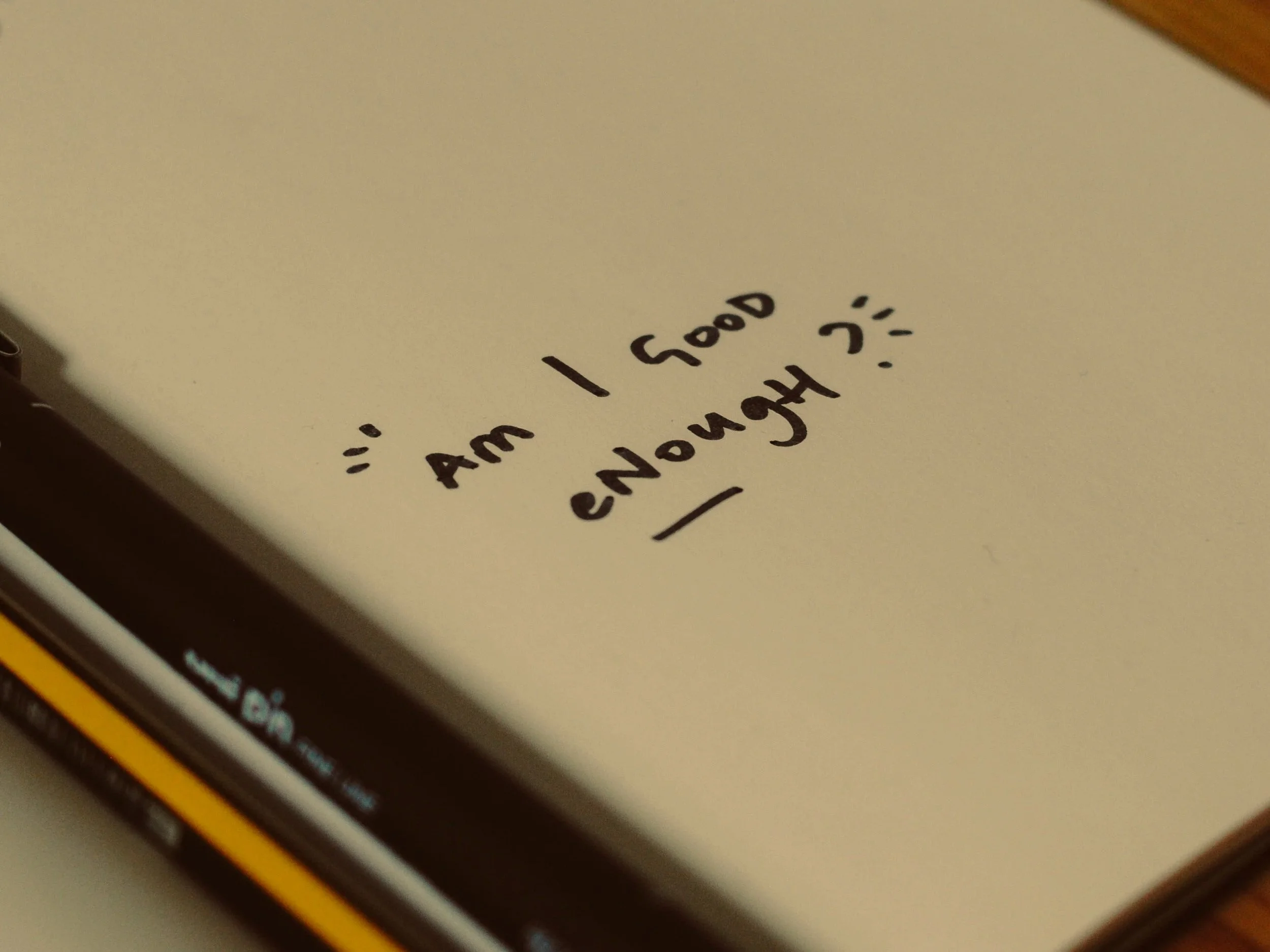
“Self-esteem is shaped through the ongoing interaction between the individual and the society they inhabit.”
Because telling a woman to “have more confidence” is not enough if the world around her is constantly giving her reasons to doubt herself.
The research was particularly meaningful because it was rooted in Malta. As Sarah explains, it explored our own culture, including language, proverbs and everyday realities, while giving Maltese women space to tell their stories in their own words.
That feels especially relevant in a small country where everyone knows everyone. Or at least someone who knows everyone. Appearance is noticed. Relationships are discussed. Parenting choices are scrutinised. Success can come with its own set of judgments.
And discrimination doesn't always look dramatic.
Sometimes it is a comment. A joke. An assumption that the mother will be the one to leave work when a child is sick.
An expectation that the woman will organise the family celebration. The idea that a successful woman must be neglecting something else.
These things accumulate. Eventually, they can become the voice in your own head.
And then came social media
Some of those pressures have only become more complicated. We are no longer comparing ourselves with the woman next door, the colleague at work or the mother at the school gate.
We can compare ourselves with thousands of women around the globe before breakfast: The perfect home. The perfect body. The perfect children. The perfect relationship. The perfect career. The perfect holiday.
The perfect balance. Ahhhhhhhhhhhh!
There is, of course, no such thing.
But scrolling doesn't always remind us of that.
As Sarah puts it, self-esteem is shaped through the ongoing interaction between the individual and the society they inhabit.
Which brings us back to the woman who says she wishes she had more time for herself. Perhaps she isn't bad at finding time. Perhaps too much is simply being asked of her.
Enough. Is enough.
I don't think the answer is for women to care less, achieve less or want less. And I certainly don't think we need another list of things women should do to become better versions of themselves.
Perhaps we need better childcare. More equal parenting. Workplaces that recognise people have lives outside work.
Men who are expected to parent just as much as women. Families that support rather than judge.
Schools that challenge stereotypes. Policies that recognise the realities of caring. And a culture that stops treating women's exhaustion as evidence of their inadequacy.
“Women - or men, for that matter - do not need to be everything to everyone. We are allowed to be human. And humans have limits.”
There is nothing inherently admirable about being permanently overwhelmed. Being exhausted doesn't make you a better mother. Working yourself into the ground doesn't make you a better employee.
Doing everything doesn't make you a better woman.
Sometimes, doing enough is enough. Or, at least, it should be.
An important conversation
Sarah hopes her research continues to contribute to a wider conversation about women's experiences in Malta and how we create environments that nurture genuine self-worth.
I like that idea.
Because conversations matter, especially the ones that make us question things we have accepted as normal.
So, the next time a woman tells you she wishes she had more time for herself, perhaps don't immediately tell her how to find it. Ask why she doesn't have it.
And when a woman says she isn't doing enough, perhaps we should ask whether she is actually failing - or whether she has simply been handed an impossible list.
Because women- or men, for that matter - do not need to be everything to everyone.
We are allowed to be human.
And humans have limits.